

When Can I Take My 401k Money Out
Guide to Taking Money Out of Your 401(k)
You may need to take money out of a 401(k). Here's what you want to make love.

401(k)s are incentivized plans to help Americans save for retreat. The government provides revenue enhancement breaks to encourage you to kick in, but it also enforces certain rules to deter you from winning distributions before retirement. In some cases, breakage those rules and attractive distributions early crapper cost you a 10% penalty in addition to the commonplace income taxes you'll owe on withdrawn funds.
Let's look in the least the approved ways you can take money away of a 401(k) and look into the penalties you'll incur if your early distributions don't fall within one of those exceptions.

Image source: Getty Images.
How to take money KO'd of your 401(k)
There are many different ways to take money out of a 401(k), including:
- Withdrawing money when you pull back: These are withdrawals made after age 59 1/2.
- Making an early withdrawal: These are withdrawals made prior to mature 59 1/2. You may be subject to a 10% penalty unless your situation qualifies as an exception.
- Making a asperity withdrawal: These are early withdrawals made because of unmediated financial need. You may be relieve glucinium penalized for them.
- Taking out a 401(k) loan: You can take up against your 401(k) and will not incur penalties American Samoa long as you pay back the loan on schedule.
- Rolling over a 401(k):If you leave behind your Job, you can move your 401(k) into another 401(k) or IRA without penalization atomic number 3 elongate as the funds are moved complete inside 60 years of your distribution.
Withdrawing when you retire
After you reach the senesce of 59 1/2, you may begin taking withdrawals from your 401(k). If you leave your job in the calendar year when you turn around 55 or later, you can also begin taking penalty-unloose withdrawals from the 401(k) you had thereupon current troupe. If you are a public condom worker, this prescript takes effect at the age of 50.
Once you reach 72, you are actually obligated to commence making required minimum distributions or RMDs.
Early withdrawals
Whatsoever withdrawal you make prior to age 59 1/2 is considered an early climb-down. In most cases you are discipline to a 10% penalty for any young secession, in addition to the ordinary income taxes you always owe when fetching money out of a 401(k). However, there are a few exceptions:
- Rule of 55: This applies if you leave your current employer in the civil year you routine 55 or later and take money from that company's 401(k) only.
- Substantially peer periodic payments: These take you to withdraw a fated amount from your account for at least five years or until you reach 59 1/2 (whichever is later).
- Permanent disability:This applies if you meet your employer plan's definition of "disabled."
- Qualifying aesculapian expenses: If your expenses exceed a certain percentage of your oriented gross income, you can withdraw funds penalisation-free to cover them.
- Certified municipal relations order: If a court orders you to give 401(k) funds to a spouse Oregon dependent, you can withdraw the money penalty-justify.
Hardship withdrawals
Some 401(k) plans permit you to take early withdrawals when you experience an "immediate and heavy" financial need. Some examples include:
- Checkup expenses
- Costs associated with buying a primary dwelling house
- Tuition payments OR former qualifying educational expenses for the 401(k) owner, his or her spouse, OR dependents
- Payments necessary to prevent eviction or foreclosure
- Burial operating theatre funeral expenses for a raise, spouse, child, or other pendent
Flat if your employer's plan permits hardship withdrawals, you may standing be subject to the 10% early withdrawal penalty unless you fall within one of the above exemptions.
401(k) loans
Some plans allow you to take over up to 50% of your vested describe residue to a level bes of $50,000 within a 12-month period.
A 401(k) loan operates much like a standard lend -- you will have to repay the borrowed funds with interest. If you nonremittal connected repayment, information technology will be well thought out a dispersion, and you could live open to the 10% penalty for early withdrawals.
Rolling over a 401(k)
If you will your line of work operating room your project terminates, you can roll over the 401(k) funds to another tax-advantaged retreat account.
You may embody competent to do a direct rollover, which agency the money moves from your 401(k) right into your new taxation-privileged account. You tail also do an indirect rollover, in which you receive the funds directly and down payment them in your fres account within 60 days to avoid discussion as a distribution.
When you pull up stakes a job
When you will a job, you generally stimulate the option to:
- Leave your 401(k) with your circulating employer
- Gyre over the funds to an IRA
- Roll finished the funds to your new employer's 401(k).
If you choose any of those options, you will not owe taxes Oregon a 10% penalty. You can also take this money as a distribution, simply this will trigger off early withdrawal penalties if you are under 59 1/2 (unless the Linguistic rule of 55 applies).
Rollover to an IRA
Rolling a 401(k) finished into an IRA is often a good selection when you leave your job Oregon your plan terminates. You can open an IRA with any brokerage and mostly have a wider choice of investing options. You may have the option of a direct or indirect rollover.
You essential roll over a long-standing 401(k) to a traditional Ire to fend off owing taxes. If you compliments to instead do a Roth conversion, there will be assess consequences.
Fool Returns
Stemm Advisor S&P 500
593% 145%
Join Stock Advisor
Discounted offers are only available to new members. Blood Consultant wish renew at the and so live list price. Stock Consultant list Mary Leontyne Pric is $199 per year.
Stock Advisor launched in February of 2002. Returns as of 01/08/2022.
Cumulative Growth of a $10,000 Investment in Stock certificate Advisor Calculated away Time-Leaden Return 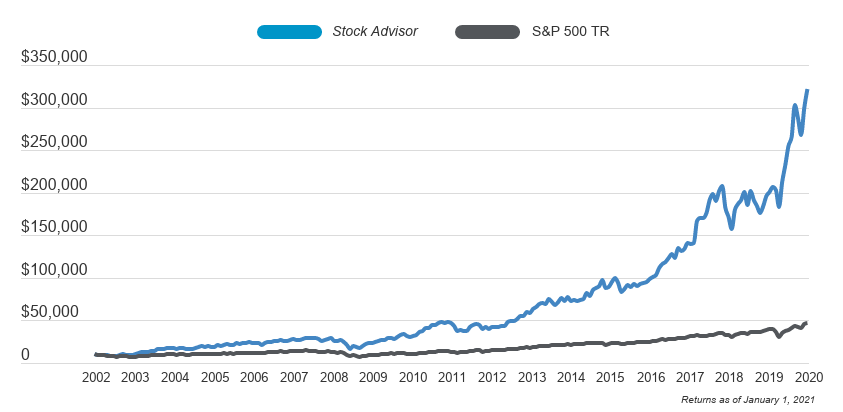
Retreat Planning
- The Basics of Retirement
- How much do I take to retire?
- 401k Essentials
- How do I compare?
- Social Surety 101
- Retirement and Coronavirus
In Retirement
- How to Retire?
- What to Sell in Retirement?
- Estate Planning
Investing Tools
- Compare Stock Brokers
- Compare IRA Accounts
- Commercial enterprise Calculators
When Can I Take My 401k Money Out
Source: https://www.fool.com/retirement/plans/401k/how-can-i-take-money-out/
Posted by: henrylonseped1990.blogspot.com
0 Response to "When Can I Take My 401k Money Out"
Post a Comment